

Key Takeaways
A Data Governance Analyst turns policy into practice—setting data standards, managing metadata & lineage, monitoring incidents, and enforcing secure, role-based access—so teams can use data responsibly and stay compliant. As AI and multi-platform stacks grow, the role becomes more strategic; success is measured by metadata/lineage coverage, data-quality outcomes, and adoption of governed assets, with clear paths to leadership (manager/director/CDO). Tools like Coalesce help by capturing lineage and context directly in transformation workflows.
As organizations continue to expand their data ecosystems—adding new platforms, increasing volumes, and bringing in more users—the question of control becomes increasingly urgent.
Who defines which data is trustworthy? Who tracks how it’s used? Who ensures regulatory compliance?
That’s where the data governance analyst comes in.
A data governance analyst ensures that an organization’s data remains accurate, secure, and accessible—while also aligning with internal policies and external regulations. Their work may not always make headlines, but it has a direct impact on everything from compliance and security to AI adoption and time to insight.
According to Markets and Markets, the global data governance market is projected to grow from $2.1 billion in 2020 to $5.7 billion by 2025—a 22.3% compound annual growth rate. This rise reflects a broader trend: businesses are realizing that without strong governance, even the most sophisticated analytics and transformation efforts will struggle to scale.
What does a data governance analyst do?
At a high level, governance analysts are responsible for defining and enforcing data standards, tracking data lineage and quality, and helping different teams work with data responsibly. But in practice, their day-to-day work touches many parts of the business.
Here are some of their core responsibilities:
Define and enforce data standards
Governance analysts develop policies and procedures that dictate how data is collected, labeled, stored, and accessed across the organization. These standards reduce ambiguity and inconsistencies—especially across departments or geographies. Done right, they allow teams to move faster without sacrificing trust or control.
Manage metadata and lineage
To build trust, teams need to know where data comes from, how it’s used, and what it means. Governance analysts are often responsible for managing metadata, including definitions, ownership, and documentation. Using a solution like Coalesce Catalog, teams can automate lineage tracking and ensure metadata stays up to date as pipelines evolve.
Want to go deeper? Here’s how Coalesce captures lineage through transformation logic.
Monitor data incidents
From unauthorized access to outdated assets, data issues happen. Governance analysts help define what qualifies as a data incident and set up systems for detection, notification, and resolution. They also ensure that incident workflows align with privacy policies and regulatory standards.
Improve data quality and documentation
Many governance teams support or maintain shared assets like business glossaries, data dictionaries, or SLA dashboards. They also work closely with data engineers and stewards to resolve data quality issues and identify systemic improvements.
Define governance KPIs
Strong governance programs rely on metrics, not just policies. Governance analysts often define and track key performance indicators—such as completeness of metadata, usage of critical tables, or number of unresolved data quality issues—to measure the maturity and effectiveness of the program.
Enable secure and scalable access
Data governance isn’t just about restriction—it’s about enabling safe and confident use of data across the business. That means working with platform teams to define role-based access control (RBAC), implementing data classification, and advising on policies that balance self-service with security.
At Coalesce, we believe governance and transformation should go hand in hand. That’s why the Coalesce platform integrates metadata capture directly into transformation workflows, reducing duplication and manual effort.
Why this role matters more than ever
Every company wants to be data-driven. But without governance, that ambition quickly runs into roadblocks—conflicting definitions, siloed systems, compliance gaps, and costly rework. Data governance analysts are the bridge between policy and practice. They’re the ones who make sure the business doesn’t just collect data—but uses it responsibly, legally, and effectively.
They also act as translators between teams. For example, an analyst might help a legal team define how personally identifiable information (PII) is classified, then work with engineers to enforce those rules using metadata and access controls. Or they might partner with marketing to ensure campaign metrics are clearly defined and consistently reported.
This cross-functional alignment becomes even more important as businesses adopt more advanced use cases—like AI-powered automation or cloud-native architectures.
Skills and qualifications
There’s no one-size-fits-all background for governance analysts. Some come from engineering, others from business or legal. But the strongest candidates typically blend technical fluency with communication and collaboration skills.
Key skills and qualifications include:
- Data management expertise – strong grasp of metadata, compliance, and governance practices
- Technical fluency – experience with SQL, data modeling, transformation logic, and modern catalog/lineage tools
- Governance & compliance awareness – working knowledge of privacy regulations (e.g., GDPR) and industry frameworks
- Communication & leadership – ability to explain data concepts across teams, with experience leading projects and coordinating stakeholders
- Professional development (optional) – certifications such as DAMA, DCAM, or CDMP
It’s not just about checking boxes—what matters most is the ability to drive clarity and consistency in how data is used across the organization.
Career paths and salary potential
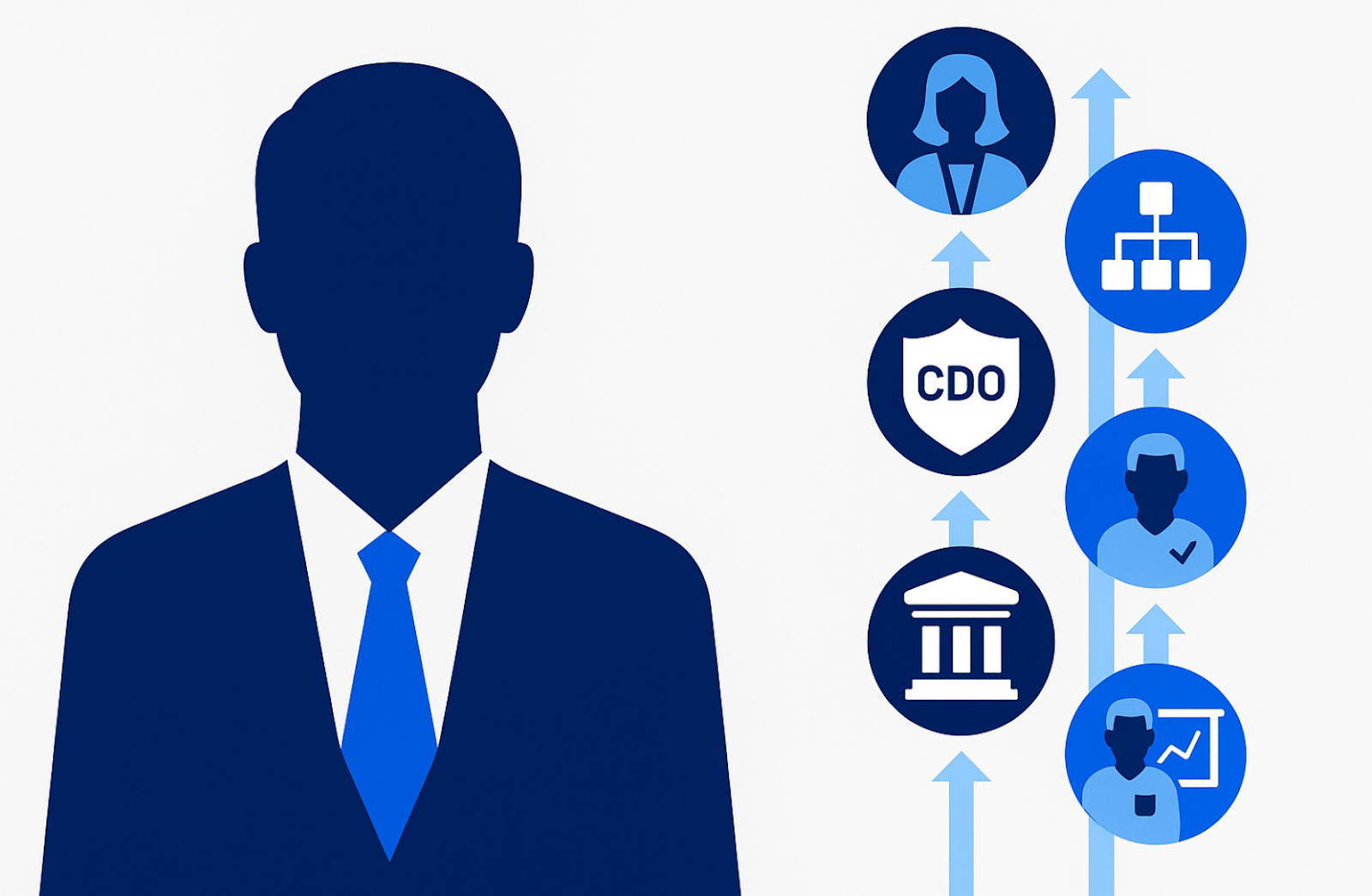
Governance roles are increasingly seen as a stepping stone to broader data leadership. Some common career paths include:
- Senior Data Governance Analyst
- Data Governance Manager or Director
- Chief Data Officer (CDO)
- Data Steward or Data Quality Lead
- Regulatory or Privacy Compliance Officer
- Data Architect
- Governance Consultant or Trainer
Some analysts choose to specialize in a particular area—like AI governance or privacy engineering—while others move into broader roles spanning analytics, engineering, or business operations.
According to Payscale, the average salary for a data governance analyst in the U.S. is around $68,500 per year, with top professionals earning over $110,000. Compensation often increases with certification, cross-functional experience, and leadership responsibilities.
The future of the role
The future of governance isn’t just about more policies—it’s about making governance more dynamic, integrated, and intelligent.
As companies adopt open table formats like Apache Iceberg, move to multi-platform architectures, and scale AI initiatives, the scope of governance expands. Analysts won’t just support static data inventories—they’ll help orchestrate data workflows, enforce real-time policies, and validate AI model inputs.
We’re entering a phase where data governance analysts become foundational to how data products are built, shared, and trusted.
At Coalesce, we’re building toward that future—where governance metadata isn’t an afterthought but a first-class citizen. Our platform helps analysts automate lineage, track transformations, and maintain context—all without slowing teams down.
Final thoughts
If you’re thinking about a career in data governance—or building a governance function in your organization—this is the moment. Companies are hiring. Tools are evolving. And the opportunity to shape the way businesses work with data has never been greater.
- Want to see how Coalesce helps governance analysts streamline workflows and increase impact across the organization? Schedule a demo to learn more.
Frequently Asked Questions About Data Governance Analysts
They translate policy into practice: define and roll out data standards, document metadata and ownership, map lineage, monitor/triage data incidents, track governance KPIs, and partner with platform/security teams on RBAC and data classification.
Core data governance analyst skills include data management and compliance know-how, SQL and data modeling fluency, clear cross-functional communication, and light project leadership. Typical tools: catalogs/lineage (e.g., Coalesce Catalog), warehouse/lakehouse platforms (Snowflake, Databricks, Fabric, Big Query), access control frameworks (RBAC/ABAC), and incident/quality tooling.
Data governance analysts operationalize governance across domains (standards, metadata, lineage, KPIs). Stewards own specific data domains—definitions, quality, and change reviews. Managers set strategy and policy, allocate budgets, and run the program/steering forums.
Track outcomes, not just activities: metadata completeness and freshness, lineage coverage for critical assets, reduction/MTTR of data incidents, access review completion rates, policy adherence (e.g., PII masking), and adoption/usage of governed datasets.